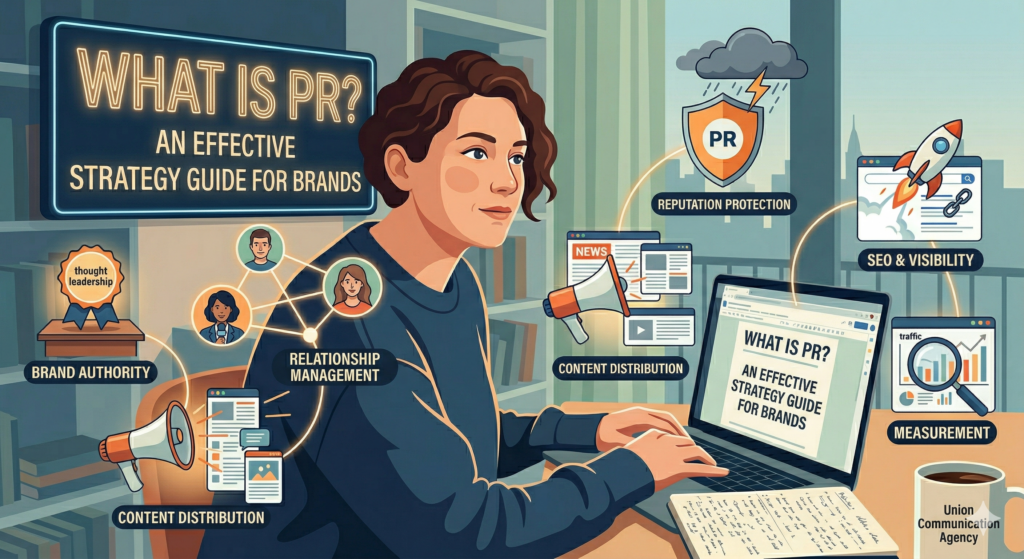
I sit down at my computer every morning and the very first thing I do is look at the data. Working as a blog writer and content strategist at Union Communication Agency gives me a completely unfiltered view into what actually gets published and what gets ignored. A lot of people mistakenly believe that writing a company announcement is the easiest part of public relations. They assume you just type up some basic details about a new product, blast it out to a massive media list, and wait for the phone to ring. I will be completely honest with you. That old approach is entirely dead. Today, if you write a piece of corporate news without considering how search algorithms will interpret it, you are basically whispering in a crowded stadium. The modern digital landscape requires you to speak two languages fluently. You must engage the human editor and satisfy the search engine crawler at the exact same time.
The Problem with Traditional Corporate Announcements
Let us talk about why most corporate news documents end up in the digital trash bin. The biggest mistake I see companies make before they come to us is writing strictly for their own ego. They fill their paragraphs with heavy corporate jargon and broad claims about being the industry leader. Journalists absolutely despise this kind of writing. A busy editor does not care that you think your new software is revolutionary. They only care about the proven facts and how those facts impact their readers. Search algorithms operate in a very similar way. Google wants to provide its users with highly relevant and deeply valuable information. If your announcement is just a wall of promotional fluff, neither the journalist nor the search engine will give it a second glance. You have to provide genuine substance.
Finding the Sweet Spot Between News and Search
To master this specific craft, you have to completely shift your writing perspective. Before my fingers even touch the keyboard to draft a piece for a client, I ask myself two critical questions. First, what does a stressed reporter need to see in the first ten seconds to realize this is a valid story? Second, what are normal people actually typing into the search bar when looking for solutions related to this specific topic? Finding the intersection between those two answers is the secret to creating truly powerful content. You provide the clear journalistic hook to earn a spot on reputable news platforms, and you strategically weave in the right terminology to ensure that publication continues to rank well in organic search results for months to come.
Nailing the Headline Without Resorting to Clickbait
Your headline is the ultimate gatekeeper. It is the absolute most important sentence you will write in the entire document. If it fails to capture immediate interest, the rest of your hard work below it does not matter at all. A brilliant headline needs to be highly factual and intensely engaging. This is also where your primary search term needs to live. However, you must avoid clickbait at all costs. Never trick a journalist into opening an email with a sensationalized subject that the story does not support. State exactly what the news entails, but frame it around the broader impact on your industry. You also need to keep it tight. Search results often truncate lengthy titles, so strict brevity will always be your best friend.
The Heavy Lifting of the Lead Paragraph
In the journalism industry, the opening section is called the lead. This paragraph must carry the entire weight of your story. If an editor decides to cut the bottom half of your announcement due to space constraints, your first paragraph must still deliver the complete message clearly. Do not waste this crucial space talking about the year your company was founded. Get straight to the point immediately. Clearly state who is involved, what exactly happened, when it took place, and why it matters to the general public. This opening section is also the absolute best place to naturally introduce your secondary search terms, signaling to the algorithms exactly what context your page belongs in.

Weaving Search Terms Organically
Ten years ago, optimization simply meant repeating the exact same phrase as many times as possible until the text became unreadable. Today, that tactic will get your site heavily penalized. Modern optimization is entirely about context and semantic depth. Instead of forcing your primary phrase over and over, you should use natural variations and related terminology. If you are announcing a new fitness application, you should naturally discuss mobile health tracking, digital wellness trends, and customized workout routines throughout the narrative. Write for human readability first and let the technical terms flow naturally into your storytelling. The algorithms are smart enough to understand the full picture without you needing to spell it out unnaturally.
Structuring Content for the Skim Reader
Nobody has the patience to read a massive block of unbroken text anymore. Both rushed reporters and advanced algorithms prefer content that is logically organized into easily digestible sections. You must use clear and descriptive subheadings to guide the reader through your narrative. These subheadings serve as excellent locations to incorporate additional search terms in a very natural way. Keep your paragraphs relatively short. Three or four sentences are usually plenty. This careful formatting makes the reading experience pleasant and helps algorithms understand the strict hierarchy of your information.
Adding Authentic Human Voices
A truly great announcement always features a strong quote from a company executive or a recognized expert. The problem is that most corporate quotes sound like they were written by a legal team. Do not use your quotes to simply repeat basic facts that you already stated earlier in the document. Quotes should provide a unique perspective, genuine emotion, or a bold vision for the future of the industry. They are the one place where you can inject real personality and opinion into an otherwise objective news piece. Make sure the quotes sound like something a real human being would actually say in a normal conversation.
How Union Communication Agency Drives Real Results
Mastering the complex intersection of traditional media relations and highly technical search optimization takes years of focused practice. It is incredibly difficult for internal marketing teams to stay fully updated on both shifting media trends and constantly evolving search algorithms. This is precisely why partnering with Union Communication Agency is such a strategic advantage. We do not just churn out standard company updates. We engineer comprehensive digital assets that are specifically designed to build massive brand authority and drive sustainable organic traffic to your website. My daily goal as a writer here is to ensure your news commands serious attention from top tier publications while simultaneously dominating search engine results. We handle the entire complex process from identifying the absolute best search terms to crafting the engaging narrative and distributing it directly to the right people.
Measuring the True Impact of Your Story
Writing the perfect document is only the beginning. How you distribute it and track its performance determines its ultimate value. Sending your news out on a cheap automated wire service might get you a few low quality links, but it rarely results in meaningful media coverage or lasting search benefits. At Union Communication Agency, we take a highly targeted approach. We pitch your specific story directly to relevant industry reporters. Once the news is finally published, the real analysis begins. We closely monitor referral traffic, the quality of the domains linking back to you, and how your organic keyword rankings improve over time. True modern PR is completely measurable, and when executed correctly, it is one of the most powerful tools you have for building sustainable digital growth.